Lukki KYC and Verification: Documents, Triggers and Withdrawal Checks
 Available in US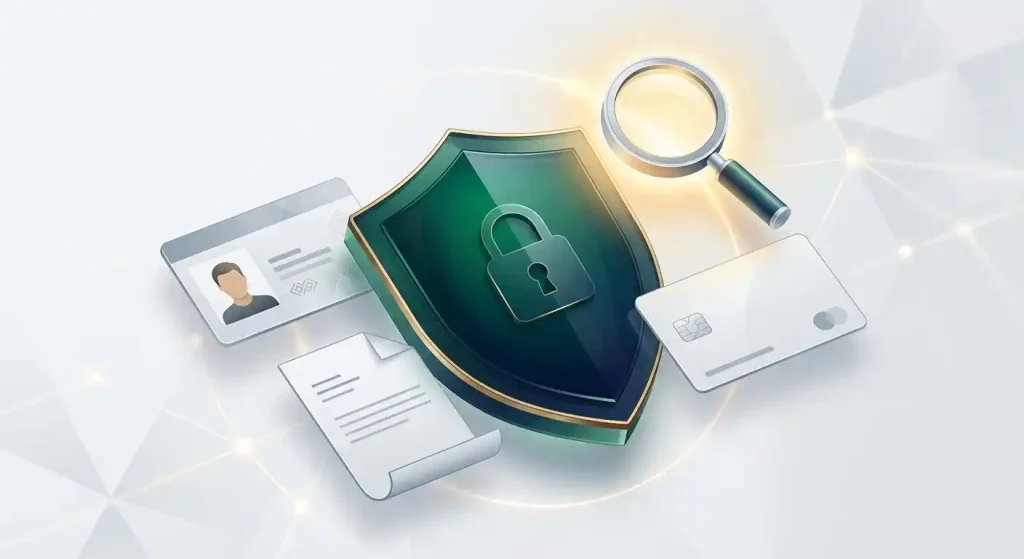
Identity verification
Lukki’s AU privacy policy states that the operator may collect verification information for age and identity checks, including ID copies and proof of address. The same policy lists registration details such as an ID or passport number, account and financial data, bank and card information, and deposit or withdrawal history. It also says personal information can be processed for anti-money laundering, regulatory compliance and fraud prevention. What the policy does not provide is a guaranteed KYC turnaround time or a promise that one verification check will cover every later payment review. The practical approach is to keep identity, address and payment evidence consistent with the account details you registered and to expect additional checks when the operator needs additional transaction or account checks.
Table of Contents
- What Lukki says it can collect for verification
- Why registration and KYC are linked
- Proof of identity and proof of address serve different purposes
- Payment ownership can become part of account checks
- AML and fraud checks are not the same as a one-time identity upload
- Practical checklist for a Lukki verification request
- What not to send unless Lukki asks for it
- Verification does not change Lukki's Australian regulatory status
- Third-party payments can create verification problems
- Why repeat checks can occur
- How Lukki verification can affect registration and cash-outs
What Lukki says it can collect for verification
The AU privacy policy separates several data categories that matter to KYC. Registration details can include a name, ID or passport number, email address, physical address, date of birth and contact information. Verification information includes documentation for age and identity verification, with ID copies and proof of address given as examples. Account and financial data can include bank account details, payment-card information, deposit and withdrawal history, winnings and transaction details.
That wording is more useful than a generic list of “KYC documents” because it shows the checks can extend beyond a single photo ID. The operator may need to compare identity data with an address, account details and payment activity. Those categories do not create one fixed document bundle for every account. A passport, national identity card, driving licence, utility bill or bank statement may be familiar examples in online verification, but the required material depends on the request shown for the specific account.
Why registration and KYC are linked
Verification works best when the registration data already matches the evidence a user can provide. A different spelling of a name, an outdated address, an incorrect date of birth or a payment method held in another person’s name can create an avoidable review issue because the operator is trying to establish that the account and the financial activity belong to the same person.
Lukki’s privacy policy says personal information is used for account management, identity verification and legal-age checks. It also says the operator processes information for payment handling, anti-money laundering obligations and fraud prevention. The Lukki registration therefore treats sign-up and verification as one connected journey rather than two unrelated pages.
Proof of identity and proof of address serve different purposes
An identity document establishes who the account holder is. Address evidence helps connect that identity to a current residence. Lukki’s policy explicitly mentions both ID copies and proof of address, so a user should not assume that submitting one automatically satisfies the other.
When a document is requested, check whether the account interface specifies acceptable file types, document age, image quality or which details must remain visible. The public policy does not state universal file-age or image-quality thresholds. Avoid cropping out names, dates, document numbers or address lines unless the live instructions explicitly allow it. At the same time, do not send extra documents that have not been requested merely because a review site lists them as common KYC materials.
Payment ownership can become part of account checks
The privacy policy lists bank account details, payment-card information and transaction history among the financial data Lukki can process. That creates a direct link between KYC and payments. If a deposit, withdrawal or source-of-funds check needs clarification, the operator may compare the payment route with the account holder whose identity has been confirmed and the transaction record.
A useful preparation step is to use payment methods that are genuinely yours and to keep basic transaction evidence available. That does not mean uploading a full bank history in advance. It means avoiding a situation where the account name, deposit source and withdrawal destination cannot be reconciled. If a payment method belongs to someone else or carries a different identity, it can create a review problem regardless of whether the original deposit succeeded.
For the separate cash-out journey, see the withdrawal guide, which covers withdrawal limits and the account checks that can occur before payment.
AML and fraud checks are not the same as a one-time identity upload
Lukki’s policy says information may be processed for anti-money laundering compliance and fraud prevention. Those purposes explain why verification can reappear after an account has already passed an earlier identity step. A change in payment behaviour, a new withdrawal route, conflicting personal data or another risk signal can require a fresh check even if an ID was submitted previously.
This is also why it is misleading to promise that KYC happens only once. The policy does not make that promise, and the exact trigger logic is not public. The safest factual wording is that Lukki may require identity verification and can process financial and transaction data for compliance and fraud-prevention purposes.
Practical checklist for a Lukki verification request
When a verification prompt appears, work from the live instructions first. The following checklist keeps the process aligned with the categories Lukki’s policy actually describes:
- Match account details. Check that your name, date of birth and address in the account are accurate before uploading evidence.
- Use a valid identity document. Submit the document type requested by Lukki and make sure the required details are readable.
- Prepare address evidence if requested. The policy explicitly allows proof-of-address collection, so keep a current document available rather than assuming ID alone will be enough.
- Keep payment ownership clear. If a payment-ownership check occurs, be ready to show that the method or account used belongs to you.
- Follow the current upload instructions. File size, accepted formats and document-age rules can change and should come from the live account screen, not an old guide.
- Do not expect a fixed turnaround promise. The public policy does not promise an exact KYC processing time.
What not to send unless Lukki asks for it
KYC preparation should not become uncontrolled document sharing. If the account requests one ID image, do not automatically send bank statements, additional identity documents and unrelated financial records. Extra personal data can increase privacy exposure without speeding up the review.
Use the account verification area or Lukki support to provide the material requested for the specific check. Redact information only if the live instructions permit it, because over-redaction can make a document unusable. Likewise, never alter a document to make account details appear consistent. If a genuine account detail is wrong, correct the account record through the proper process.
Verification does not change Lukki’s Australian regulatory status
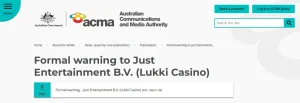
Completing KYC is an operator-level account control. It is not evidence that Lukki is licensed or authorised as an Australian online casino. Under ACMA’s guidance, online casinos fall within the prohibited interactive gambling services that providers must not offer to people in Australia. ACMA’s 2026 compliance report also records a formal warning to Just Entertainment B.V. for providing prohibited and unlicensed regulated interactive gambling services connected with Lukki Casino.
That regulatory context belongs on the Lukki licence and legal status, but it matters here because a successful identity check should not be confused with local regulatory approval. KYC can confirm who an account holder is; it does not convert an offshore service into an Australian-authorised online casino.
Third-party payments can create verification problems
Lukki’s terms prohibit deposits from bank accounts, cards, e-wallets or other payment methods registered to another person. Deposits are expected to come from a payment method held in the account holder’s own name. This rule gives payment ownership a direct role in KYC because the casino can compare the registered player with the person or account behind a transaction.
The withdrawal terms also allow Lukki to request identity documents, payment-system evidence and utility bills before processing a cash-out. Similar material may be requested again even if documents were supplied earlier. For that reason, a completed identity check should not be treated as a guarantee that no later transaction review will occur.
Why repeat checks can occur
Identity confirmation and transaction review answer different questions. An account can have completed an earlier identity step and still face a later request connected with a particular payment method, withdrawal or fraud-prevention review. Lukki’s terms expressly allow further documentation before a cash-out even when similar material has been supplied before.
How Lukki verification can affect registration and cash-outs
Lukki’s current policy supports a simple practical conclusion: verification can sit between initial registration and unrestricted account use, and payment information can become part of the same compliance review. Keep registration details accurate, use payment methods connected to your own identity, and follow the specific document request shown in the account rather than a generic checklist from a third party. The operator’s public policy confirms ID and address evidence as possible verification categories but does not promise an exact completion time. For Australian users, keep that account-level process separate from the broader ACMA regulatory question.
Related Lukki topics: Lukki Australia review.
Recommend
Lukki Australia FAQ: PayID, Tax, BetStop, Support and Common Questions
Lukki Australia Guide Australia FAQ and decision guideThe main Australian questions concern payments, BetStop scope,...

Lukki Casino Bonuses in Australia: Current Offers, Wagering and Terms
Lukki Australia Guide Bonus guide for AustraliaLukki promotion pages set out the deposit amount, code,...
Lukki Payments in Australia: AUD Deposits, Cashier Methods and the PayID Gap
Lukki Australia Guide Payments and cashier guideLukki's AU payments area displays AUD methods, payment categories,...

Lukki Casino Games and Pokies: Library, Providers and AU Restrictions
Lukki Australia Guide Games and pokies guideLukki organises its casino catalogue into categories and provider...
Lukki Licence in Australia: Curaçao, ACMA and the Interactive Gambling Act
Lukki Australia Guide Licence and legal statusThe primary Australian regulatory evidence is ACMA's formal warning...

Lukki Mobile Casino in Australia: Browser Access, Home-Screen Use and App Status
Lukki Australia Guide Mobile casino guideThe Lukki AU website adapts its navigation, game lobby and...

Lukki Registration in Australia: Sign-Up Flow, Account Checks and Key Caveats
Lukki Australia Guide Account guideLukki registration begins with the account form and continues into email...